Did you know that a single mud dauber wasp nest on your siding could be responsible for clearing out over 500 spiders from your Sacramento backyard? While those crusty mud tubes look like an eyesore on your clean eaves, they actually house one of the most beneficial neighbors you can have. I agree that seeing any stinging insect near your front door is unsettling. Most homeowners I visit are worried about their kids getting stung or they confuse these solitary wasps with aggressive yellow jackets. In fact, nearly 20% of the service calls I get during our peak season between July and September are related to wasps just like these.
I want to help you identify the mud dauber wasp, explain why they are actually great for naturally controlling black widows, and show you how I safely handle their nests when they become a structural nuisance. I promise to show you the difference between a threat and a helper so you can feel comfortable in your own yard. This guide covers their unique behavior, the mess-free way to remove those tubes, and when it is time to call a local expert like me to get the job done right without the corporate price tag.
Key Takeaways
- Learn how to spot a mud dauber wasp by its unique "thread-waist" and those distinct organ-pipe mud tubes on your siding.
- Understand why these solitary wasps are much calmer than yellow jackets and almost never sting unless they are directly handled.
- Discover how these insects act as natural pest control by clearing out black widows and other spiders from your Sacramento property.
- Get my professional tips for using a simple putty knife to safely remove mud structures without leaving a mess on your stucco or siding.
- Find out when high-reach nests require expert help and how I can help you prevent future mud tubes in Roseville or Auburn.
What is a Mud Dauber Wasp? Identification for Sacramento Homeowners
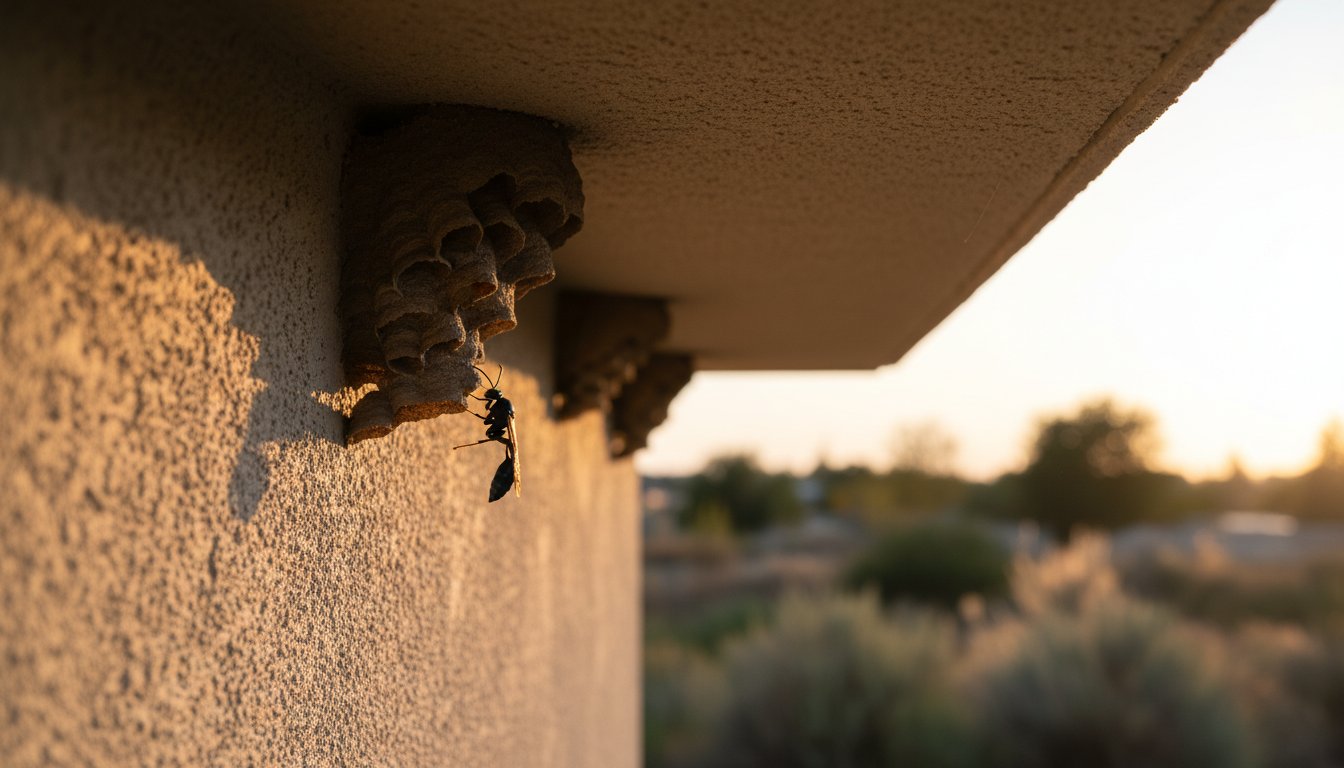
If you've lived in the Sacramento Valley for any length of time, you've likely seen those strange mud tubes stuck to your eaves or garage walls. These are the work of the Mud dauber wasps. Unlike the aggressive yellow jackets that try to ruin your backyard BBQ, these insects are solitary builders. I start seeing them most frequently as our weather warms up in late spring, with activity peaking during the hot months from July to September. This is when they head to garden puddles or nearby riverbanks to collect mud for their construction projects. In July 2024, one local pest control company reported that up to 20% of their calls were wasp-related. Many of those callers were terrified they had a yellow jacket infestation when it was actually just a few docile mud daubers.
The Thread-Waist Appearance
I often tell my customers in Auburn and Rocklin that the easiest way to identify this wasp is by looking at its waist. These wasps have an incredibly thin, needle-like segment between their thorax and abdomen. It's a much more slender profile than the bulky body of a hornet or a common honeybee. Most of the species I encounter in our area are either solid blue-black with a metallic sheen or black with bright yellow markings. A mud dauber wasp is a slender, long-bodied insect with a needle-thin waist that builds distinct organ-pipe mud nests on protected structural surfaces.
Solitary vs. Social Wasps
Understanding the difference between solitary and social wasps will save you a lot of stress. Social wasps, like yellow jackets, live in large colonies with a queen and hundreds of workers. They are hardwired to defend their home. If you get too close, they'll attack in a group. Mud daubers are different. They are solitary, meaning each female builds her own small nest alone. Since there is no massive colony to protect, they have very little reason to be aggressive toward you or your pets.
In my experience, you'll rarely see more than one or two of these wasps at a time. They spend most of their day hunting spiders or flying back and forth with mouthfuls of mud. Because they don't have a hive mind mentality, they are significantly less dangerous than the pests that build paper nests. I've stood inches away from them while they work, and they usually just ignore me. They are focused on their task, not on picking a fight with a homeowner.
The Unique Nesting Habits of Dirt Daubers
The construction process of a mud dauber wasp is a fascinating display of insect engineering. I often see these wasps hovering around garden puddles or the banks of the American River, gathering mouthfuls of wet soil. They carry this mud back to your home, where they patiently layer it to create long, cylindrical tubes. These structures are often called "organ pipes" because of their parallel, tube-like appearance. Once a tube is finished and stocked, the female seals the end with a thick mud plug to protect the next generation inside. For more technical details on their life cycle, you can check out this guide on Mud Dauber Identification and Control.
Spiders: The Mud Dauber’s Favorite Meal
I find that my customers in Roseville and Rocklin are much more tolerant of these wasps once they learn about their diet. Mud daubers are elite spider hunters. A single female can pack between 25 and 30 spiders into just one cell of her nest. Since a full nest can have up to 20 cells, one mud dauber wasp can effectively remove over 500 spiders from your property. The blue mud dauber is particularly helpful because it specializes in hunting the venomous black widow. Instead of killing the spiders, the wasp paralyzes them with a sting, keeping the "larder" fresh for the larvae to eat once they hatch. If you've noticed these nests in your garage, it's a strong sign that the wasps are finding plenty of creepy-crawlies nearby to hunt.
Structural Impact of Mud Nests
While these wasps aren't aggressive, their homes can cause some headaches for your property's curb appeal. The mud they use is surprisingly durable. If a nest is left on your stucco or siding for an entire season, the minerals in the dirt can leach out and leave a permanent shadow or stain. I've seen many clean homes in the Sacramento area marred by these brown streaks long after the wasps have moved on. In my years of service, I’ve found these three spots are the most common places for nests to thrive:
- The underside of porch ceilings and patio covers.
- The corners of window frames and door jams.
- Inside sheds, pool pump housings, or cluttered garage corners.
Removing these nests while they are still fresh makes it much easier to avoid permanent marks on your exterior. If you’re seeing these mud structures popping up faster than you can keep up with, feel free to text me for a quick quote on a full perimeter sweep.
Do Mud Daubers Sting? Safety and Risks
I get asked this question almost every time I'm out on a service call: will these things sting my kids? The short answer is yes, a mud dauber wasp is physically capable of stinging, but it's incredibly rare for them to actually do it. In my experience serving the Sacramento area since 2005, I've found their temperament to be even milder than a common honeybee. A honeybee is a social insect that will sacrifice itself to protect the hive, but these wasps are solitary. They have no colony to defend and no alarm pheromone to call in backup. They generally only sting if you physically crush them against your skin or accidentally step on one while barefoot. Because they are so docile, they are actually great for your Rocklin garden, acting as a free, organic pest control service that doesn't bother you while you're weeding or planting.
Sting Symptoms and First Aid
If you do happen to get stung, don't worry too much. Most people describe the sensation as a dull ache rather than the sharp, electric shock of a Red Paper Wasp. You'll likely see a small red bump and feel some minor itching for a day or two. I usually suggest simple home remedies like a cold compress or a baking soda paste to keep the swelling down. However, you must seek medical attention immediately if you experience hives, dizziness, or any trouble breathing after a sting, as these are signs of a serious allergic reaction.
When the Nest is the Real Danger
The most significant safety risk usually isn't the wasp, but the vacant lot it leaves behind. Once the mud dauber larvae hatch and chew their way out, those mud tubes become prime real estate for other pests. I've frequently found that abandoned nests around Sacramento homes become shelters for jumping spiders or even more aggressive wasp species looking for a pre-built home. Leaving these old tubes on your eaves or porch can attract the very pests you're trying to avoid. For families with curious pets or toddlers who like to poke at things, these nests can hide surprises that aren't as friendly as the original builder. Clearing them out isn't just about keeping your house looking clean; it's about removing a potential harbor for other biting insects.

How to Safely Remove Mud Dauber Nests
Most Sacramento homeowners want these nests gone simply because they look like unsightly clumps of dirt on a beautiful home. While we've established that the mud dauber wasp is a helpful neighbor, I understand that you don't want your porch looking like a construction site. If the nests are within reach, you can usually handle the removal yourself with a few basic tools. I always recommend following these five steps to ensure you don't leave a permanent stain on your siding or stucco.
- Step 1: Confirm the nest is inactive. Look for small exit holes in the mud. If you see holes, the larvae have already matured and left. If it’s sealed, the mother or her offspring are still inside.
- Step 2: Use a plastic putty knife or a paint scraper. Gently slide the blade under the edge of the mud tube. You want to "pop" the nest off the surface rather than scraping it, which can scratch your paint.
- Step 3: Scrub the residue. Mud daubers use a mix of soil and saliva that acts like cement. Use a nylon brush and warm, soapy water to get rid of the remaining brown ring.
- Step 4: Bag the debris immediately. Remember that these tubes are filled with paralyzed spiders. If you leave the broken nest on the ground, you're just inviting ants or other scavengers to your doorstep.
- Step 5: Seal the area. Use an exterior-grade caulk to fill any small cracks or crevices where the wasps were building.
The Best Time for Removal
Timing is everything when you're dealing with any type of wasp. I suggest tackling this task in the early morning or late evening when temperatures are cooler. Wasps are much less active during these times. It's also easier to remove the tubes when the mud is bone dry. If the mud is still damp, it will smear across your siding and create a much bigger mess. You can tell a mother wasp is currently using the nest if you see her hovering nearby or if you hear a distinct high-pitched buzzing sound coming from inside the tube as she vibrates her wings to shape the mud.
Prevention Tips for Next Season
Once you've cleared the nests, you'll want to keep them from coming back. I've found that homeowners in Lincoln with raw wood eaves have the most trouble because the mud sticks better to unpainted surfaces. Keeping your eaves painted or sealed makes it much harder for the mud to adhere. You can also spray a mixture of water and peppermint oil around common nesting spots as a natural deterrent. A quick blast from your garden hose once a week during the summer is often enough to knock down any new "starter" nests before they become a problem. If you have nests in high peaks or hard-to-reach gables, contact me for professional removal so you don't have to risk a ladder fall.
Professional Wasp Control: When to Call I C Pests
While the mud dauber wasp isn't aggressive, reaching their nests on a two-story home in Roseville or Auburn can be a dangerous job for a homeowner on a ladder. I've spent years helping neighbors manage these structural nuisances without the corporate runaround. My "Got Pests?" service model is simple: I don't just scrape the mud away; I treat the area to prevent them from coming back. I also take a look at your landscaping to ensure we aren't just shifting the problem from your eaves to your bushes. If you have a quote from one of the big franchises, give me the chance to meet or beat their price. I take pride in being a scrappy, local alternative that prioritizes your home over high-volume metrics.
Why Wesley is Your Local Expert
I have been licensed to handle pests since 2005. Over those two decades, I've seen every variation of the "organ pipe" nest the Central Valley can produce. One thing that sets me apart is that I'm dual-licensed. This means I'm qualified by the California Structural Pest Control Board to treat your home's structure and by the Department of Agriculture to handle your landscaping. Most companies only hold one of these licenses. If you're unsure what kind of wasp you're looking at, just text me a photo of the nest. I'll give you an honest assessment immediately so you know exactly what you're dealing with before I even arrive.
Comprehensive Structural Protection
My goal is to be your long-term partner for a pest-free home. While we might start with a mud dauber wasp problem, I provide comprehensive protection against the ants, spiders, and earwigs that thrive in our Sacramento climate. I want to be clear about my limits, though. I don't treat termites. If I find evidence of termite damage while I'm inspecting your eaves, I won't try to sell you a service I don't provide. Instead, I'll refer you to a trusted professional who specializes in them. Whether you have a single mud tube or a larger infestation, I'm here to help you get it sorted quickly and affordably. Call or Text Wesley at I C Pests today!
Take Back Your Home from Unwanted Mud Nests
Now that you can spot the difference between a helpful mud dauber wasp and an aggressive yellow jacket, you can enjoy your backyard with a lot less stress. These solitary builders are actually working for you by clearing out hundreds of spiders from your Rocklin or Auburn garden. While their mud tubes are a structural eyesore, they don't have to be a permanent part of your siding or eaves. I've been a licensed technician since 2005, and I've built my locally owned small business on providing honest, direct service to my Sacramento neighbors.
Because I'm dual-licensed for both Structural and Landscaping pest control, I can give your entire property a thorough sweep that most big franchises miss. Don't settle for a corporate quote that treats you like a number. Got Pests? Let me meet or beat your current pest control price! I'm ready to help you clear away the mess and keep your home protected all season long. Give me a call or text today; I'd love the chance to help you out.
Frequently Asked Questions
Do mud daubers come back to the same nest every year?
Mud daubers don't typically return to reuse an old nest once they have emerged as adults. However, you might see new activity in the same spot because the location is sheltered and attractive to other females. If you leave the old tubes, you're providing a foundation for next year's generation or even other pests like the blue mud dauber, which is known to reuse abandoned nests.
Will a mud dauber sting my dog or cat?
It's highly unlikely that a mud dauber will sting your pet unless your dog or cat physically traps or crushes the insect. These wasps are solitary and non-aggressive; they don't have a hive to protect. Most stings to pets happen when a curious cat swats at one or a dog tries to snap it out of the air. Their venom is designed for spiders, so the reaction is usually very mild.
What happens if I leave the mud nests on my house?
Leaving mud nests on your house can lead to permanent mineral staining on your stucco or siding. Over time, the moisture and soil composition can leach into the paint, leaving a dark shadow even after the dirt is gone. Additionally, empty tubes often become homes for other insects. I've often seen jumping spiders and even more aggressive paper wasps take over these vacancies shortly after the original larvae have left.
Can I use a garden hose to wash away a mud dauber nest?
You can use a garden hose to knock down a mud dauber wasp nest, but I don't recommend it for dry nests. The water often turns the hard clay into a muddy slurry that streaks down your walls and creates a much bigger cleaning job. It's much more effective to pop the dry nest off with a plastic scraper first and then use a wet brush to scrub away the remaining ring.
Are mud daubers and "dirt dobbers" the same thing?
Yes, "dirt dobber" and "mud dauber" are just different regional names for the same group of solitary wasps. While "mud dauber" is the more common term I hear in the Sacramento Valley, many of my clients from the South use the term "dirt dobber." No matter what you call them, they all share the same habit of building mud structures and hunting spiders to feed their young during the summer months.
Do mud daubers eat the spiders they catch?
Adult mud daubers don't actually eat the spiders they catch; they primarily feed on flower nectar. The spiders are strictly for their offspring. The female mud dauber wasp paralyzes the spiders and stuffs them into the mud cells to serve as a fresh food source for the larvae. Once the egg hatches, the larva consumes the paralyzed spiders to fuel its growth until it is ready to emerge as an adult.
Is it true that mud daubers kill black widows?
It is absolutely true that mud daubers are one of the primary natural predators of the black widow spider. The blue mud dauber in particular specializes in hunting these venomous spiders. They are so efficient that a single nest cell can contain up to 30 paralyzed spiders. This is why many gardeners in Rocklin and Lincoln choose to leave the wasps alone unless their nests are in a high-traffic area.
How much does it cost to have a professional remove wasp nests in Sacramento?
For a professional one-time wasp removal service in Sacramento, you can expect to pay between $100 and $400. This price varies depending on the height of the nests and the size of the property. If you're looking for broader pest control that covers your whole home and yard, single visits can range from $150 to $1,000. I always offer a "meet or beat" guarantee to ensure you get the best local price.