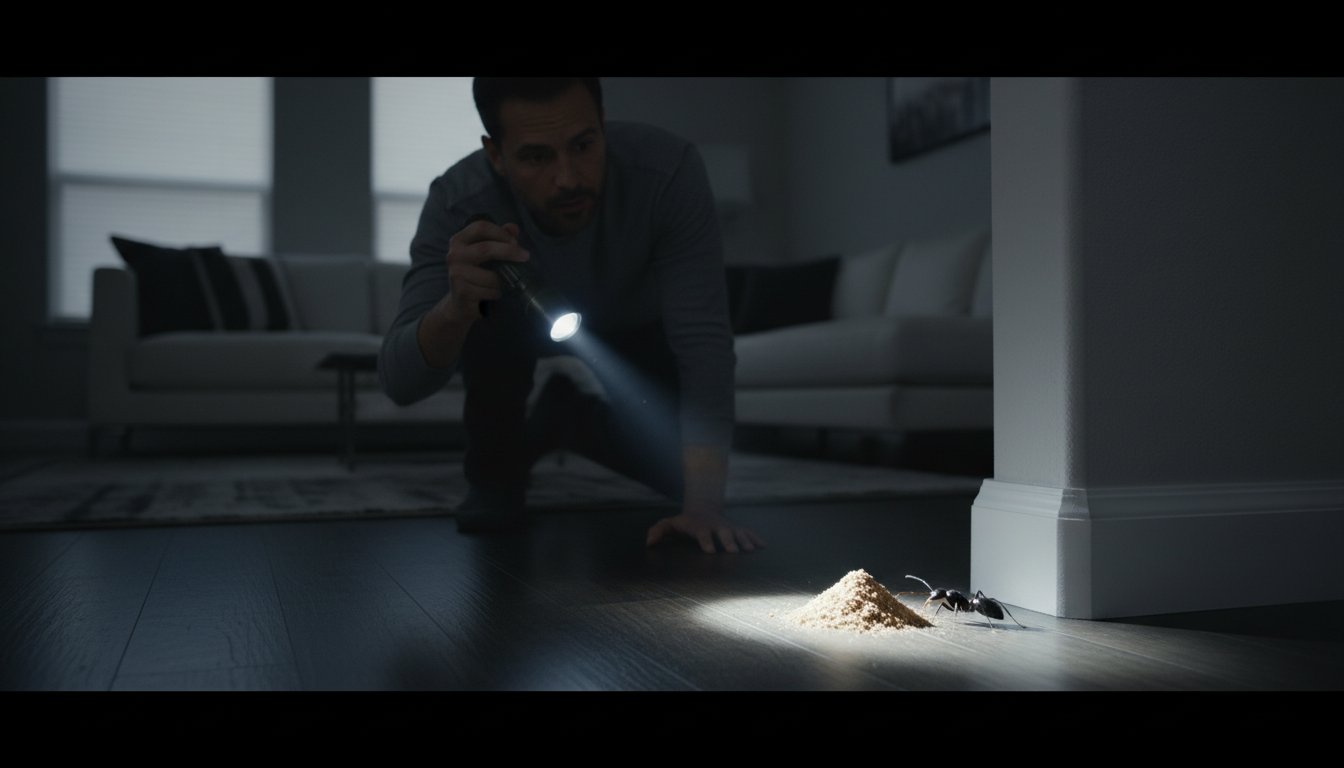
Last Tuesday, I visited a family in Roseville who spent over $400 on hardware store bug sprays before realizing the tiny piles of wood shavings in their laundry room weren't from a home renovation. They were seeing the early signs of carpenter ants, but like many homeowners in the Sacramento area, they initially mistook them for common house ants or even termites. It's stressful to think about insects quietly hollowing out your walls while you sleep, especially when you know structural repairs in California can easily cost thousands of dollars.
I agree that you shouldn't have to be an expert to protect your property. Since I started I C Pests in 2005, I've seen how these pests target specific wood types in our local climate. I promise to show you exactly how to spot these subtle warnings before the damage becomes a financial nightmare. We'll go through a simple checklist of what to look for, from "frass" piles to specific clicking sounds, so you can decide if it's time to call or text me for a professional inspection.
Key Takeaways
- Learn how to identify these large pests by their unique one-node waist and understand why they excavate wood rather than eating it.
- Discover the most common early signs of carpenter ants, including tell-tale sawdust piles called frass and faint rustling noises behind your walls.
- Find out how Sacramento’s native Oak trees and overgrown bridge vegetation provide easy access for colonies to move into your home.
- Get the facts on how to distinguish smooth carpenter ant galleries from the muddy, gritty tunnels left behind by termites.
- Understand why DIY baits often fail and how my personal, thorough inspection can save your Auburn or Lincoln property from structural damage.
Identifying Carpenter Ants in the Sacramento Valley
In the Sacramento Valley, we deal with a specific kind of headache: the carpenter ant. These aren't your average garden variety pests. A carpenter ant is a structural wood-excavating pest that thrives in the Sacramento climate, often moving from your landscape into your home's framing. One of the first things I look for is their size. They're big, reaching up to 5/8 of an inch long. If you look closely, you'll see they have a single node on their waist, which is a key way to tell them apart from other species. Identifying the early signs of carpenter ants before they cause structural damage saves you money and stress.
Unlike termites, these ants don't actually eat wood. They chew through it to build galleries for their colonies. This Carpenter ant overview explains how they prefer moist or decaying wood to start their nests. In Northern California, the most common species I run into is Camponotus vicinus. They love our local environment, especially when they find a moisture source like a leaky pipe or a clogged gutter near your siding.
Size and Color: What to Look For
Don't expect every ant in the colony to look the same. A single colony has different sizes of workers, known as majors and minors, all working together to support the queen. You should look for these specific physical traits:
- Color: Usually a dull, matte black or a mix of reddish-black.
- Body: A smooth, rounded thorax and a single node between the waist and abdomen.
- Size Variation: Workers ranging from 1/4 inch to 5/8 inch in the same area.
If you see winged ants, or swarmers, inside your Roseville home during the spring, call or text me immediately. Seeing these winged versions indoors is one of the clearest early signs of carpenter ants because it means an established colony is likely living inside your walls and trying to expand.
The "Big Ant" Misconception
I often hear homeowners say they just saw "one big ant" and assumed it wandered in from the yard. That's a mistake. That lone ant is often a scout. Its job is to find food and water, then lead the rest of the colony back to your kitchen or bathroom. Since I started I C Pests in 2005, I've seen how easily these scouts are dismissed as harmless field ants. My experience as a dual-licensed professional, covering both the California Structural Pest Control Board and the Department of Agriculture, helps me spot the difference quickly. I've been treating homes and landscapes for 19 years, so I know that if you see one scout, there's a high chance a nest is hidden nearby. Don't wait for a full-blown infestation; let me give you the chance to protect your property with a local expert's touch.
The 5 Primary Signs of a Carpenter Ant Infestation
Identifying the early signs of carpenter ants before they chew through your structural beams is the best way to save money on repairs. I have been inspecting homes in the Sacramento area since 2005, and I can tell you that these pests don't move into your house by accident. They are looking for moisture and soft wood. If you catch them early, we can stop the colony before it requires a major construction project to fix the damage.
Spotting Frass: Not Just Regular Sawdust
One of the most common things I see in Lincoln homes is a pile of what looks like sawdust near a baseboard or in the garage. This is called frass. Unlike termites, carpenter ants don't actually eat the wood; they just excavate it to make room for their nests. This debris is a mix of shredded wood fibers, dead insect parts, and other colony trash. When you look closely at Carpenter Ants vs. Termites, you will notice that termite "frass" is actually hard, six-sided pellets, while ant frass looks like messy wood shavings. This frass is often found directly below the "kick-out" hole where ants dump debris from their tunnels. I recommend checking under your baseboards and near crawl space vents regularly.
Listening to Your Walls
Carpenter ants are nocturnal, which means they do their heavy lifting while you are trying to sleep. When a house gets quiet at night, you might actually hear the colony working. Homeowners often describe the sound as a light rustling or like "crinkling cellophane" coming from inside the walls. This is the sound of thousands of tiny legs moving and mandibles scraping against the wood. Because this sound is so faint, many people miss it until the colony has grown to a massive size. If you think you hear a light tapping in the kitchen or bathroom walls after 10:00 PM, it is time to investigate.
- Foraging Trails: Look for specific paths these ants take from your Auburn yard into your kitchen. They often follow "lines" like garden hoses, fence rails, or even power lines.
- Visible Damage: If you find a piece of wood that looks like it has been carved out, check the texture. Carpenter ants leave behind smooth, sandpapered-looking galleries. This is usually found in moist areas like windowsills or near leaky pipes.
- Presence of Swarmers: Seeing large, winged ants indoors is a major red flag. These are the reproductive members of the colony. They are often attracted to light sources and usually indicate that a mature nest is already established nearby.
If you notice any of these signs around your property, you can send me a text to get a professional opinion on the situation. Catching a colony during the foraging stage is much easier than dealing with one that has already moved into your framing. I've spent nearly 20 years learning exactly where these pests hide in Roseville and the surrounding areas, and I'm happy to help you protect your home.
Why Sacramento Yards Lead to Carpenter Ants in the House
Sacramento is famous for its "City of Trees" status, but those majestic native Valley Oaks are often ground zero for home infestations. These trees serve as the primary nesting sites for large colonies that can thrive for decades. When your Oak branches grow long enough to touch your roofline, they create a literal bridge for pests to bypass your foundation treatments. Spotting the early signs of carpenter ants often starts with looking up at your tree canopy rather than down at your baseboards. I've been licensed since 2005, and I've seen how a single overgrown branch can funnel hundreds of ants into a Roseville attic in a single night.
Our local weather patterns also play a major role in how these ants behave. During our cold, wet winters, colonies move toward the dry warmth of your home's framing. When our summer temperatures spike above 100 degrees, the ants migrate indoors searching for the moisture trapped in your wall voids or near plumbing fixtures. This is why I chose to hold dual licenses in both Structural pest control and Landscaping. Most big corporate companies only treat the house, but I stop the "pipeline" by managing the yard and the structure simultaneously. Give me the chance to meet or beat your current service price while providing a more thorough look at your entire property.
The Tree-to-Home Connection
In Roseville neighborhoods, I frequently identify "hot spots" that homeowners overlook. Old tree stumps, forgotten firewood piles, and thick layers of decorative mulch are the most common culprits. Identifying the Primary Signs of a Carpenter Ant Infestation is much harder if you have mulch piled directly against your siding, as it hides their entry points. To keep your home safe, I recommend these steps:
- Keep decorative mulch at least 12 inches away from your foundation.
- Store firewood stacks at least 20 feet from the house and up off the ground.
- Adjust sprinklers so they don't spray directly against your stucco or wood siding.
Treating the interior of your home without addressing these yard sources usually leads to a full re-infestation within 30 to 60 days. When you notice the early signs of carpenter ants, such as a few "scouts" wandering near your kitchen island, the main colony is likely established in a damp stump just a few yards away.
Entry Points in Northern California Homes
Auburn and the surrounding foothills present unique challenges because of varying soil moisture levels. Ants in these areas are constantly on the move, seeking stable environments. They often enter through attic vents, gaps in door sweeps, or utility line penetrations where cables enter the house. My "Got Pests?" model starts with a 360-degree exterior inspection to find these tiny vulnerabilities. I look for "frass," which is a sawdust-like material that ants kick out of their galleries. Finding this debris near a utility gap is a clear indicator that they've already moved in. Because I'm a local owner-operator, I take the time to seal these small gaps that larger franchises might miss. Call or text me today, and let's secure your home from the outside in.

Carpenter Ants vs. Termites: Knowing the Difference
I often get calls from worried homeowners in Roseville who see wood shavings and think their house is falling down. One of the most common early signs of carpenter ants is finding "frass," which looks like a small pile of sawdust. It's easy to confuse this with termite damage, but these two pests operate very differently. While termites are looking for a meal, carpenter ants are just looking for a place to live. Termites eat the wood for nutrition, but ants simply chew through it to create galleries, moving the debris out of their way to keep their home tidy.
Identifying the Wood Damage
If you look inside a carpenter ant tunnel, you'll see it looks like it's been sanded down. These galleries are smooth and clean because the ants are meticulous housekeepers. Termites are the opposite. They leave behind muddy, gritty residue and build "mud tubes" to travel safely between the soil and your home. You won't ever see a carpenter ant building a mud tube. A quick way to tell them apart is by looking at their bodies; while a carpenter ant has a distinctly pinched waist, a termite has a thick, straight waist that doesn't taper off.
- Antennae: Ants have elbowed or bent antennae, while termites have straight, beaded ones.
- Wings: If they have wings, an ant's front wings are longer than the back ones. Termite wings are all the same length.
- Cleanliness: Ants leave "frass" (sawdust and insect parts) outside their holes. Termites leave mud or tiny wood-colored pellets.
Why an Accurate Identification Saves You Money
Treating the wrong pest is a waste of your hard-earned money. Termite treatments are a completely different ballgame and usually cost a lot more than ant control. I've held my license with the California Structural Pest Control Board since 2005, and I believe in being 100% honest with my neighbors. I specialize in structural ants and landscaping pests, but I don't perform termite treatments myself.
If I find termites during my inspection, I'll give you a referral to a trusted specialist instead of trying to sell you a service I don't do. My goal is to provide the best local service at a price I can meet or beat, even if that means pointing you toward another expert for specific termite work. If you're seeing early signs of carpenter ants or just aren't sure what's crawling in your crawlspace, text me for a free estimate today and I'll help you figure it out.
Professional Inspection and Next Steps in Auburn & Lincoln
I have spent nearly two decades crawling through crawlspaces and inspecting attics across Auburn and Lincoln. When you notice the early signs of carpenter ants, you don't want a technician who is rushing to finish their route. You want the person whose name is on the business. At I C Pests, I handle the inspections myself. I’ve been licensed since 2005, and I hold dual certifications from the California Structural Pest Control Board and the Department of Agriculture. This allows me to look at your property differently than a standard bug guy would. I examine your landscaping and your home’s structure as one connected system.
The Problem with DIY Ant Control
Most homeowners in Sacramento head to the big-box store for a spray bottle as soon as they see a stray ant. This often makes the problem worse. Common over-the-counter sprays are repellents. When you spray them, you might kill ten ants, but you alert the other ten thousand. This triggers a survival mechanism called budding. The colony senses a threat and splits into several smaller colonies, scattering deeper into your walls.
Carpenter ants are also incredibly picky eaters. Their dietary needs change based on the season and the needs of the queen. Store-bought baits often sit untouched because they don't have the right protein or sugar balance. I use professional-grade, non-repellent treatments. These are undetectable to the ants. They walk through the treatment and carry it back to the heart of the nest. It is the only reliable way to reach the queen and stop the structural damage to your home.
Get a Local Quote You Can Trust
I am a local owner and operator, not a franchise. This means I don't have the massive overhead of a corporate call center or a fleet of branded sales vans. I pass those savings directly to you. For families in Roseville and Rocklin, I offer a clear promise: give me the chance to meet or beat any competitor's written quote. I want to earn your business by being more thorough and more affordable than the big guys.
- Direct Access: You get my personal cell phone number, not an automated menu.
- Expertise: Licensed for both structures and landscaping since 2005.
- Fairness: Competitive "Meet or Beat" pricing for all local residents.
If you have spotted sawdust or heard clicking in your walls, don't wait for the damage to get expensive. I am ready to help you protect your investment with a plan that actually works for the long term. Call or Text Wesley at I C Pests today for your carpenter ant inspection!
Take Control of Your Home’s Safety
Catching the early signs of carpenter ants before they tunnel through your home’s framing saves you from expensive structural repairs. Remember that these pests often migrate from Sacramento Valley yards into your walls; spotting wood shavings or hearing faint rustling sounds means it's time to act. Since I've been licensed since 2005, I know exactly how to tell the difference between a simple ant problem and a more serious termite infestation in local areas like Auburn and Lincoln.
I am a locally owned small business owner with a dual license for both Landscaping and Structural pest control. This unique qualification allows me to treat the source in your yard and the problem in your house at the same time. You don't have to overpay for corporate services that treat you like a number. I'm here to help you protect your investment with a personal touch and expert knowledge of Northern California's specific pest challenges.
Call or Text Wesley at I C Pests now to meet or beat your current pest control quote!
I look forward to helping you keep your home pest-free and secure for years to come.
Frequently Asked Questions
Is it possible to have carpenter ants but no visible damage?
Yes, you can have an active infestation without seeing any holes or galleries in your wood. These ants often hollow out the interior of structural beams while leaving the outer layer completely intact. I've seen cases where the only clue was a small pile of sawdust, known as frass, near a baseboard. Because they work from the inside out, the structural integrity of a beam can drop by 20 percent before you notice a single exterior exit hole.
Do carpenter ants in Sacramento sting or bite humans?
Carpenter ants in the Sacramento area don't sting, but they can give you a painful bite if they feel threatened. They have large mandibles designed for carving wood; they can even spray formic acid into the bite wound to cause a burning sensation. While they aren't aggressive like fire ants, a colony can contain over 10,000 workers that will defend their nest if you disturb it. If you see them crawling on your skin, it's best to brush them off gently.
Can I get rid of carpenter ants myself with store-bought spray?
Most store-bought sprays only kill the 10 percent of ants that are out foraging, which doesn't solve the root problem. This often makes the situation worse by causing budding, where the colony splits into multiple new locations as a survival tactic. To truly stop the early signs of carpenter ants, you need professional-grade baits that workers carry back to the queen. I use my dual license to treat both your landscaping and the structure to ensure the source is gone for good.
How much does a professional carpenter ant treatment cost in Roseville?
Professional treatment costs depend on the size of your property and the extent of the colony. According to HomeAdvisor's 2024 data, the national average for specialized ant treatments ranges from $150 to $500. For a local quote in Roseville, I recommend you call or text me directly. I'll take a look at your specific situation and give you a meet or beat price that fits your budget while providing much better service than the big corporate guys.
What attracts carpenter ants to a home in the first place?
Moisture is the primary attractor for these pests. They look for wood with a moisture content of 20 percent or higher, which is common after a leaky pipe or a heavy Sacramento winter storm. Piles of firewood stacked within 5 feet of your foundation or clogged gutters also provide the perfect bridge into your attic. Once they find a damp spot, they start excavating to build their satellite nests and begin expanding the colony through your walls.
What happens if I ignore the early signs of carpenter ants?
Ignoring the early signs of carpenter ants leads to expensive structural repairs that homeowners insurance rarely covers. Over a period of 12 to 24 months, a large colony can significantly weaken support joists and wall studs. This damage can eventually cause doors to stick or floors to sag. It's much cheaper to treat the ants now than to hire a contractor later to replace the framing of your home. Give me a call to stop the damage before it gets worse.
How long does it take for carpenter ants to cause structural damage?
It typically takes 3 to 5 years for a new colony to reach a size where they cause noticeable structural damage. However, if they move into a pre-existing void or damp area, they can begin weakening wood immediately. A mature colony of 50,000 ants can remove several ounces of wood every month. By the time you see windowsill dust or hear rustling in the walls, the colony has likely been active for at least 2 seasons.